Benchmark yourself in 60 seconds
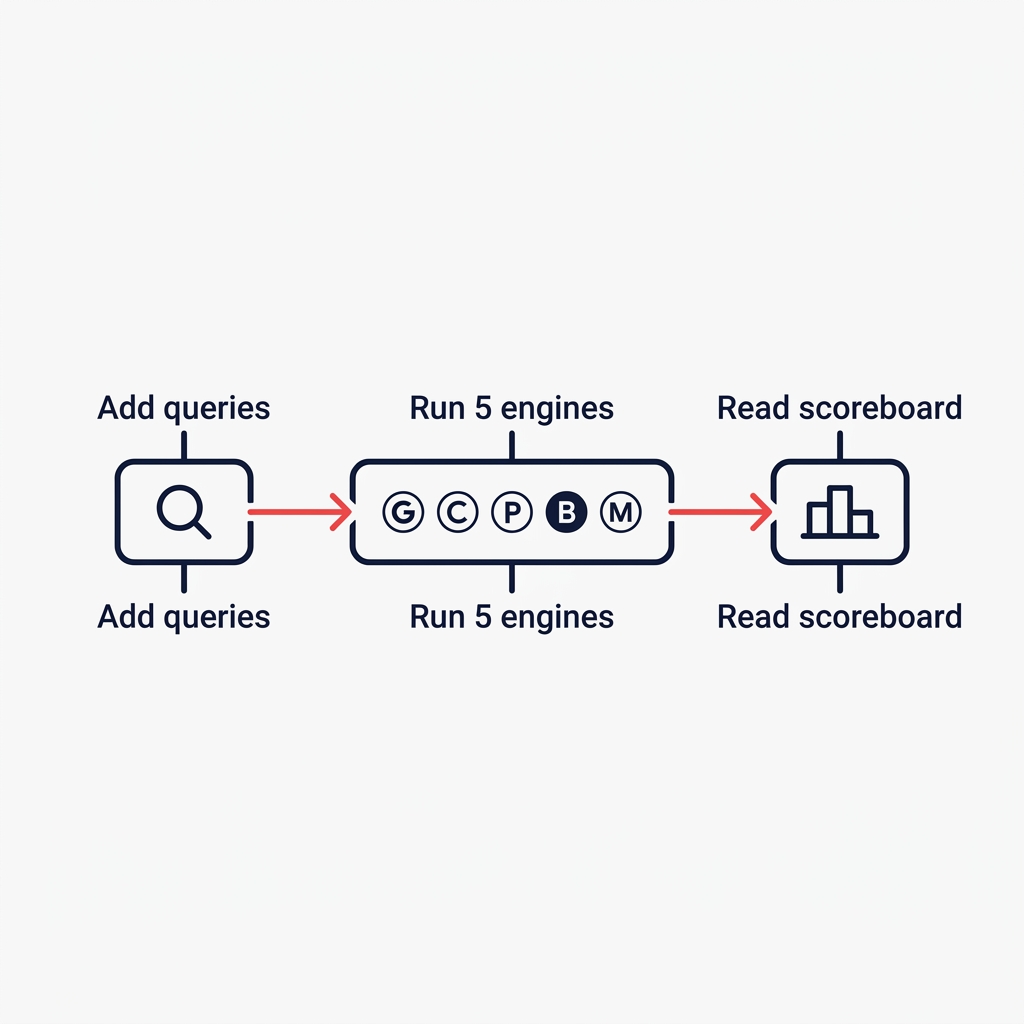
Run a free AI visibility audit across ChatGPT, Perplexity, Claude, Gemini and Grok. See your citation rate, share-of-voice, and which competitors own the answers you want. No card.
Most 'AI visibility tools' are a dashboard with a chatbot bolted on. A real one answers a single, uncomfortable question: when your buyers ask AI about your category, how often does it name you — and how often does it name a competitor instead? Everything else is decoration.
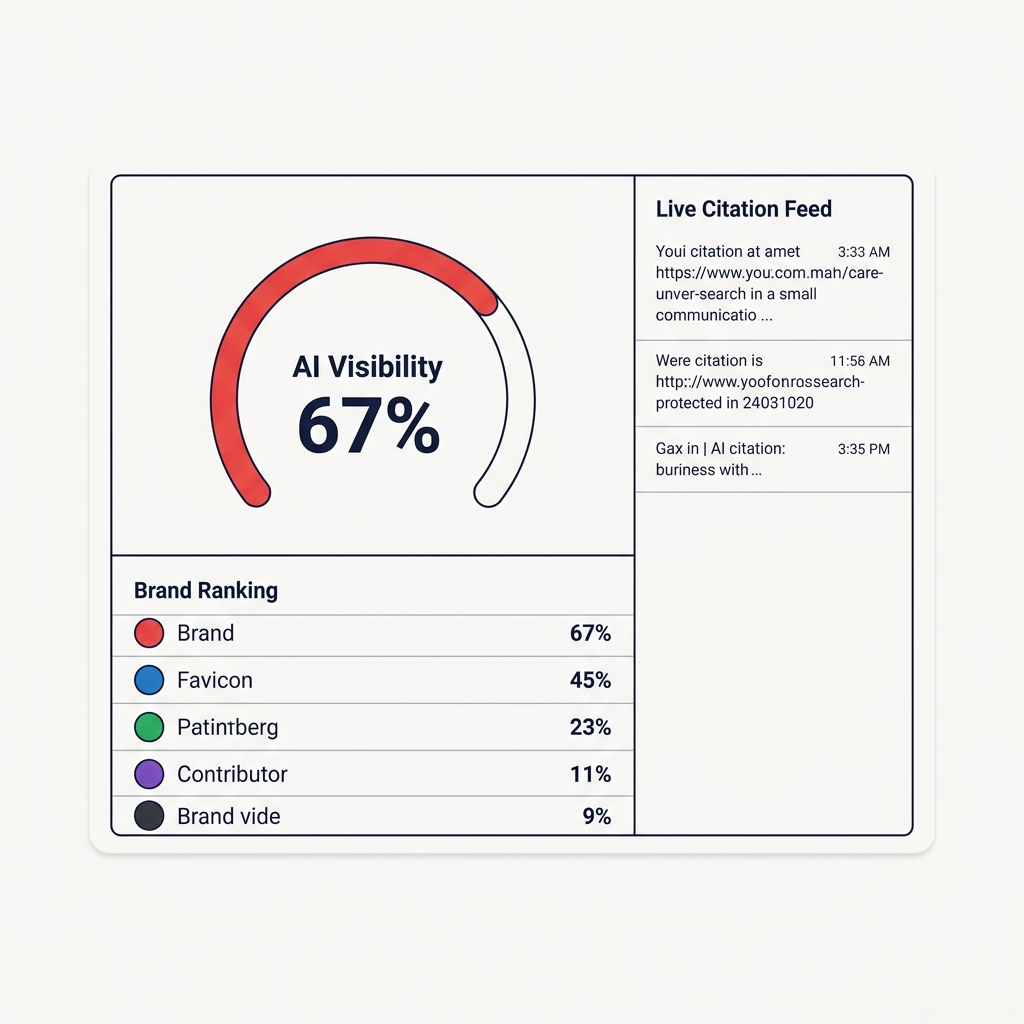
Here's what actually separates a tracker worth paying for from a screenshot generator, and how to choose.
What a real AI visibility tool must measure
- 01Citation rate — the share of tracked answers that link to your domain. This is the core number.
- 02Mention rate — brand name-drops that don't always carry a link, but still shape the buyer's shortlist.
- 03Share-of-voice — your citations as a percentage of all brands cited, per engine, so you know if you're winning or just present.
- 04Sentiment — whether the AI frames your brand positively, neutrally, or negatively. A negative citation is worse than none.
- 05Per-engine breakdown — ChatGPT, Perplexity, Claude, Gemini and Grok behave differently; one blended number hides where you're losing.
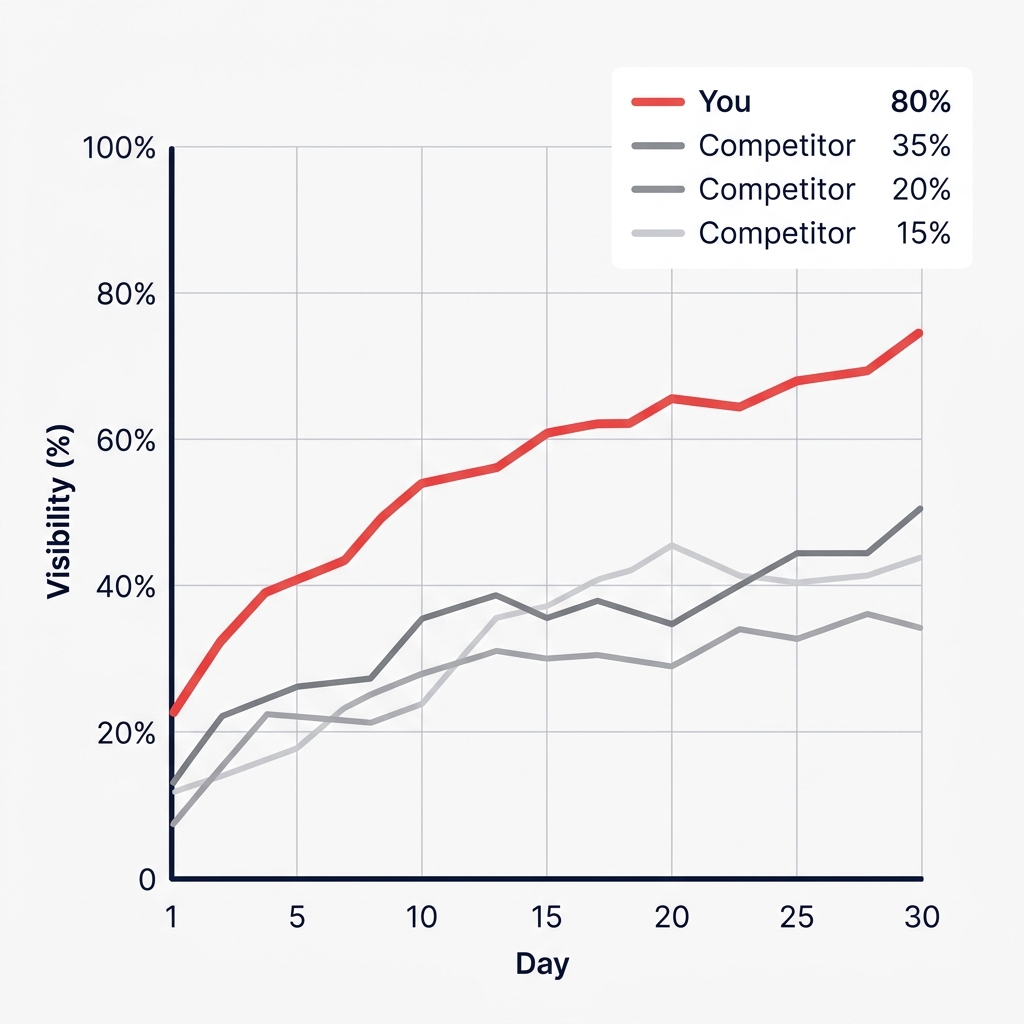
- 06Trend over time — a point-in-time score is a vanity metric. You need the line, so you can prove a change moved it.
The tell of a shallow tool
If it shows a single 'AI visibility score' with no per-engine split, no competitor share-of-voice, and no history, it's a snapshot, not a tracker. You can't run a feedback loop on a snapshot.
Features that actually matter
| Capability | Why it matters | Must-have? |
|---|---|---|
| Multi-engine tracking | Buyers don't all use one engine | Yes |
| Competitor share-of-voice | Tells you if you're winning or just present | Yes |
| Citation source feed | Shows which pages the AI quoted — your content roadmap | Yes |
| Sentiment analysis | A negative mention can cost you the deal | High |
| Scheduled re-runs | Manual checks go stale instantly | Yes |
| Alerts on competitor gains | React in days, not at month-end | High |
| Auto-fix / content suggestions | Closes the loop from insight to action | Nice to have |
How to choose without overpaying
Start with the engines your buyers actually use. For most B2B that's ChatGPT and Perplexity; consumer-facing brands should add Google AI Overviews. Confirm the tool tracks competitor share-of-voice — without it you can't tell a real win from background noise. Then check it stores history; a tool that can't show you last month can't prove progress.
Be skeptical of per-seat pricing on a tool you'll check weekly, and of any product that can't show you the exact source URL the AI cited. That citation feed is half the value — it's literally the list of pages to go earn.
Where Stackwise Rank fits
Stackwise Rank tracks all five major engines, rolls them into one comparable visibility score, and breaks out citation rate, mention rate, share-of-voice and sentiment per engine — with a live feed of every source the AI quoted. It charts the trend so you can prove a content change moved the number, and alerts you when a competitor overtakes you on a query you should own. The free audit gives you the baseline before you commit to anything.
Common mistakes when buying
- Picking a tool that tracks one engine because it's cheaper — you go blind everywhere else.
- Optimizing a single score with no competitor context.
- Ignoring sentiment, then getting cited as the cautionary tale in your category.
- Buying a snapshot tool and calling it a strategy.
FAQ
What is an AI visibility tool?
Software that runs your tracked queries through AI answer engines on a schedule and reports how often each one cites or mentions your brand, versus competitors.
How is it different from a rank tracker?
Rank trackers measure your position in Google's link list. AI visibility tools measure whether you appear inside the AI-generated answer — a separate surface rank trackers can't see.
Which engines should a tool cover?
At minimum ChatGPT and Perplexity; ideally also Claude, Gemini, Grok and Google AI Overviews, rolled into one comparable score.